


Vartis Engineering, based in Gujarat is one of the leading manufacturers and suppliers of stainless steel and alloy steel Globally. With their huge team of skilled manpower and modern technology, the company ensures a superior production quality. The entire team works under the able leadership and guidance of Mr Anant Gajjar. The father-son duet is a perfect blend to impart the traditional techniques and the modern approaches to all the productions being carried out at Vartis Engineering.

How does the gravity die casting process work?
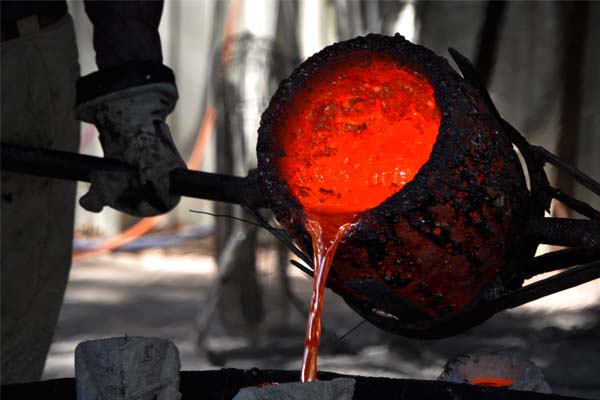
Gravity die casting was one of the very earliest processes to be invented for metal and light alloy die casting. In this process which can be fully automated, the molten metal is poured directly from a ladle into a semi-permanent or permanent die.
The goal is to fill the die with minimum turbulence through one or more channels to reduce oxidation and foaming. This minimises porosity and inclusions, giving optimum metal characteristics in the final casting.
Gravity die casting equipment can have a vertical or horizontal mould opening, or tilting technology with 0/90 ° or 0/120 ° tilting provides an alternative. With tilting die-casting, the metal flow at the die inlet is controlled by the tilting angle and speed of the die.
One of the advantages of tilting gravity die casting is that it can produce dense, high quality castings with excellent mechanical attributes like strength and stiffness. That makes it very suitable for demanding automotive applications like brake system and suspension components.
Gravity die casting technology’s main advantages include:
suitability for high-volume, automated production
minimum investment required for small and medium volume production
produces parts with excellent mechanical properties that are also suitable for heat treatment
As sand cores can be placed within the mould, gravity die casting can also produce parts with complex shapes.
Gravity die casting technology is ideal for diverse complex aluminium casting production of automotive parts such as: turbos, brake calipers, knuckles, engine cylinder heads, engine blocks and pistons. It suits many other industries too, from lighting components to kitchen tools.
We are an ISO 9001-2008 certified company. Established in year 2000. We have in house machining facility and we are manufacturing & supply metal machined components & assemblies as per our client's requirement. We are catering to Vartis engineering segments, i.e. Automobile, Agriculture, Aerospace, Defense, Marine and other General engineering parts.
Copyright 2022-23 vartis engineering pvt ltd. all right reserved - design by triadic.