


Vartis Engineering, based in Gujarat is one of the leading manufacturers and suppliers of stainless steel and alloy steel Globally. With their huge team of skilled manpower and modern technology, the company ensures a superior production quality. The entire team works under the able leadership and guidance of Mr Anant Gajjar. The father-son duet is a perfect blend to impart the traditional techniques and the modern approaches to all the productions being carried out at Vartis Engineering.

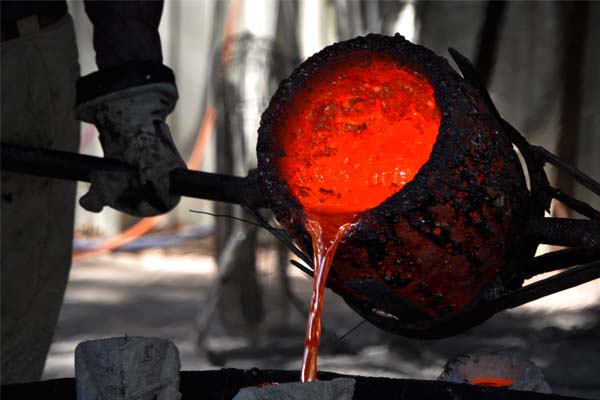
Investment casting refers to the ceramics formed around the wax patterns to create a casing for molten metal to be poured. Once the wax patterns are created, they are melted onto a gate system, dipped into slurry and sand to form a layered casing, then replaced with the melted metals such as stainless steel, aluminum, and much more. Below are some short videos with some of the steps in the investment casting process.
Investment castings have several advantages over other formed parts from processes such as sand casting and lost foam casting. Investment casting is ideally suited to smaller, more intricate designs and provides the precision necessary to incorporate logos, product IDs and numbers onto the surface.
Unlike sand casting, which requires breaking apart the mould to divest the pattern, the investment casting process results in a smoother surface with only a minor parting line. Investment casting generally does not need much in the way of secondary processing (polishing, trimming etc.). Investment casting uses hard refractory ceramic, creating finished parts with much tighter tolerances than sand casting. A summary of investment casting benefits can be seen below:
Allows many intricate and complex forms to be cast. The repetitive close tolerances, intricate passages and contours allow for the most complex of forms to be created using investment casting. The same configurations are not possible when using machine tools to create parts.
The resulting parts are moulded in a single casting, therefore they have smooth surfaces with no parting lines.
Alloys such as aluminum, bronze, magnesium, cast iron, carbon steel, and stainless steel can be used, as well as difficult to machine materials.
Parts have good dimensional accuracy. Combining the materials in one casting is less complex than what is involved when welding or fabricating parts together to form a whole.
Allows for both low and high-volume manufacturing.
The cost of production is reduced since waste is minimal and it doesn’t require too much assembly.
It’s also possible to add names, logos or numbers to the parts.
90-degree angles can be cast with no shrinkage allowance needed.
We are an ISO 9001-2008 certified company. Established in year 2000. We have in house machining facility and we are manufacturing & supply metal machined components & assemblies as per our client's requirement. We are catering to Vartis engineering segments, i.e. Automobile, Agriculture, Aerospace, Defense, Marine and other General engineering parts.
Copyright 2022-23 vartis engineering pvt ltd. all right reserved - design by triadic.